How to Choose a Soundbar - Buyer's Guide
Last updated: 9 Mar 2026
Do You Actually Need a Soundbar (Yes, Your TV Speakers Are Rubbish)
Let's be honest: TV speakers are terrible. Tiny drivers crammed into a thin screen produce hollow, tinny, lifeless sound that makes dialogue hard to hear and movies feel flat. Most people crank the volume trying to fix it, which just makes things worse.
A decent soundbar fixes this immediately. Suddenly you can hear what actors are saying without blasting your neighbours out of the water. Movies have depth and impact. Music doesn't sound like it's being played through a cardboard tube.
But here's the catch: not every soundbar is created equal. A $200 soundbar might be marginally better than your TV speakers. A $600 soundbar will genuinely transform your watching experience. The difference matters.
If you watch telly regularly, a soundbar is worth it. If you only watch occasionally and don't care about audio quality, your TV speakers are technically adequate, just rubbish. But most people benefit from the upgrade more than they expect to.
Bottom line: buy a soundbar if you watch two or more hours of content weekly. Skip it if you barely watch telly. Everyone else gets massive quality-of-life improvement for a reasonable investment.
Dolby Atmos Explained Simply
Dolby Atmos is surround sound with height. Instead of speakers just left and right of your screen, Atmos adds speakers above and sometimes behind you. This creates a three-dimensional sound field where sound objects move around you rather than staying in a flat plane.
In theory, this sounds amazing. Helicopters pass overhead, rain falls from the ceiling, explosions envelope you. In practice, most soundbars fake Dolby Atmos by bouncing sound off your ceiling rather than having actual ceiling speakers. It's not the same thing, but it works better than you'd expect.
Is Atmos worth the extra cost? If you're buying a proper soundbar and subwoofer system, probably yes. If you're just buying a soundbar alone, the difference is subtle. You'll notice it sometimes, not constantly.
Real Dolby Atmos requires a proper home theatre setup with actual ceiling speakers. Budget soundbars can't do true Atmos. The Samsung HW-Q990D and Sonos Arc both claim Atmos but they're faking the height effect with clever speaker placement and processing.
My advice: don't pay extra specifically for Atmos unless you're genuinely interested in 3D sound. It's nice to have but not essential for good dialogue, music, or general movie enjoyment.
Soundbar vs Soundbar Plus Sub vs Full Surround System
Three approaches to improving your TV audio exist, each with different cost and complexity.
Soundbar alone is the simplest option. Single unit sits under or above your TV, handles everything. Pros: clean, simple, no installation hassle. Cons: limited bass impact, no directional surround. The Sonos Beam Gen 2 ($614) works well as a standalone if your TV is loud enough or if you don't care about thumping bass.
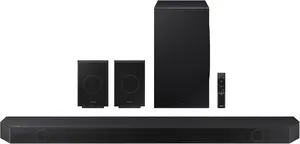
Soundbar plus subwoofer is the sweet spot for most people. The soundbar handles dialogue and mids, the sub adds impact and bass. This combination costs more but sounds dramatically better. The Samsung HW-Q990D ($1,299) includes a sub and sounds genuinely excellent. You get cinema-style bass without needing to rearrange your lounge.
Full surround system adds rear speakers for proper surround sound. Great if you've got the space and budget. Sonos can add rear speakers to existing setups if you decide later. But for most small to medium lounge rooms, soundbar plus sub is plenty.
Start with soundbar plus sub. Add surrounds later if you want them. Don't buy a full system upfront without knowing if your room and viewing style actually benefits from it.
Smart Ecosystem: Sonos vs Bose vs Samsung and Lock-In
Your soundbar choice locks you into an ecosystem if you want to expand later, so pick wisely.
Sonos is the market leader for a reason. Their app works smoothly, system expansion is straightforward, and they support AirPlay, Spotify Connect, and basically everything. Add rears, add a sub, add speakers in other rooms. It just works. Downside: Sonos is pricey and older products have been abandoned after software updates.
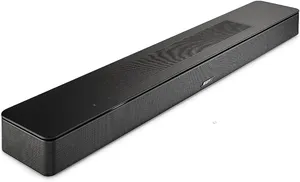
Bose makes excellent soundbars but their ecosystem is smaller. The Soundbar 600 ($477) is genuinely good value, but if you want to expand later, options are limited. Bose speakers are less common in lounge rooms than Sonos.
Samsung's approach is to use their TV integration heavily. If you've got a Samsung TV, their soundbars (HW-Q990D at $1,299) integrate tightly and work beautifully. With non-Samsung gear, it's just another soundbar, no magic. Great if locked into Samsung, less appealing if you're device-agnostic.
Sony makes reasonable soundbars but their ecosystem play is weak. They work fine standalone but don't really expand or integrate. The HT-A7000 ($1,299) is capable but doesn't have the longevity feel of Sonos.
If you think you'll expand later, pick Sonos. If you're keeping everything standalone, any brand works fine.
Size Matching Soundbar to Your TV
Size matching sounds simple but gets wrong surprisingly often. Too small and your soundbar looks silly and sound doesn't fill the room properly. Too large and it blocks your TV or looks bulky.
The general rule is soundbar width should be roughly 70-80% of your TV width. A 65-inch TV needs a soundbar about 120cm wide. A 55-inch TV suits a soundbar around 100cm. This keeps proportions sensible and ensures adequate coverage.
Compact soundbars (80-90cm) suit smaller TVs under 50 inches or tight spaces where you can't fit anything larger. The Sonos Beam Gen 2 at 65cm width is compact and suits 43-55 inch TVs well.
Full-size soundbars (110-130cm) work with 55-75 inch TVs. This is the most common category. The Samsung HW-Q990D is around 142cm, which suits very large TVs or feels cramped on smaller screens.
Check your TV size and available mounting space before ordering. A soundbar that doesn't fit your setup is useless, no matter how good it sounds. Measure the width of your TV stand or wall space. Don't guess.
Also check depth. Some soundbars are shallow (10cm), others stick out 20cm. If your TV sits on a stand with limited space underneath, shallow options like the Sonos Beam matter.
Budget Tiers for Australian Soundbars
Soundbar pricing in Australia splits into clear tiers, and what you get for your money varies significantly.
Entry-level (under $400) gets you basic sound improvement over TV speakers. The Bose Soundbar 600 ($477) edges slightly over but offers genuine value. Expect better dialogue clarity and modest bass. No Atmos, no surround options, limited connectivity. Fine for casual watchers who just want clearer speech.
Mid-range ($400-800) is where value peaks. The Sonos Beam Gen 2 ($614) fits here and sounds excellent. Better bass response, proper app controls, AirPlay support. You can add surrounds later if you want. This tier balances features and price well.
Premium ($800-1,300) includes flagship options like the Samsung HW-Q990D ($1,299), Sonos Arc ($1,299), and JBL Bar 1000 ($999). These include subwoofers, Dolby Atmos, and proper home theatre integration. Better build quality and sound that genuinely impresses. Worth it if you watch lots of films and want theatre-like experience.
My honest advice: the Sonos Beam Gen 2 at $614 gives you 90% of the experience of soundbars costing twice as much. Unless you want Atmos or a built-in sub, don't spend more. Save money or spend it on a separate subwoofer instead.
My Top Picks
Ready to pick one?
Check out my ranked list with scores, prices, and AU availability.
See the Best Soundbars