How to Choose an OLED TV - Buyer's Guide
Last updated: 24 May 2026
WOLED vs QD-OLED: Two OLED Technologies, Different Strengths
Every OLED TV in 2026 uses one of two panel technologies, and the difference matters more than people realise. Understanding which one is in the TV you are looking at is the single most important decision in this category.
WOLED (LG Display's technology, used by LG, Sony, Panasonic, and Philips) uses white OLED subpixels with a colour filter to produce red, green, and blue. The strength is mature production, deeper blacks in some scenes, and lower price for equivalent screen size. The trade-off is colour brightness; WOLED panels lose some peak HDR colour brightness because the white-pixel-then-filter design is less efficient at saturated reds and greens.
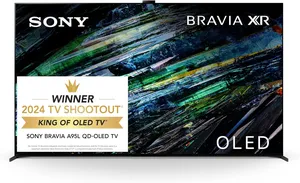
QD-OLED (Samsung Display's technology, used by Samsung S95D and S90D, Sony A95L and Bravia 9, Dell Alienware monitors) uses blue OLED with a quantum dot layer that converts to red and green. Higher peak colour brightness in HDR, more saturated colours, slightly better off-axis viewing. Trade-off is the panel surface can show ambient light reflection differently (more rainbow-y than WOLED's matte finish on some models).
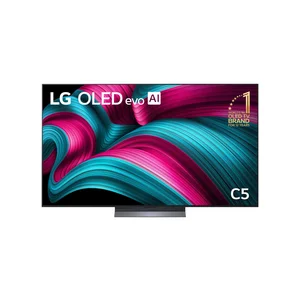
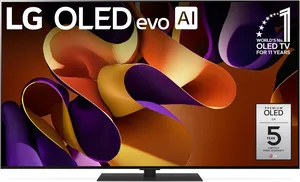
For 2026 in Australia: the LG C5 ($2,599-2,794 at 65-inch) and LG G4 ($4,499-4,999 at 65-inch) are WOLED. The Sony A95L ($4,799-5,499 at 65-inch) and Samsung S95D ($4,299-4,999 at 65-inch) are QD-OLED. The Panasonic MZ2000 is WOLED with the Master OLED Ultimate panel (LG Display top tier). For most buyers in typical living rooms, WOLED is the safer default; QD-OLED is the upgrade for HDR-heavy content viewers in dim rooms.
Brightness, Burn-In, and Why Both Matter Less in 2026 Than They Used To
The two historic complaints about OLED TVs were brightness (not bright enough for sunny living rooms) and burn-in (static images can permanently mark the panel). Both have been substantially addressed in the 2024-2026 generations.
Brightness: WOLED MLA panels (LG G4, Panasonic MZ2000) hit 1,500 nits HDR peak in real measurements; QD-OLED panels (Samsung S95D, Sony A95L) hit 2,000 nits HDR peak. Both are competitive with mini-LED QLED for HDR highlights and meaningfully better for full-screen contrast. The 800-nit OLEDs of 2021 are not what you are buying in 2026; modern OLEDs are bright enough for any Australian living room except direct-sunlight north-facing rooms in summer (where mini-LED QLED is still the safer call).
Burn-in: 2024+ OLEDs include sophisticated mitigation (pixel orbiter, automatic logo brightness reduction, panel refresh cycles every 2,000 hours). Real-world burn-in reports from RTINGS' multi-year accelerated longevity testing show the 2022+ generation panels survive 10,000+ hours of static-image content (news tickers, gaming HUDs, sports score graphics) without visible burn-in. Manufacturer warranties have followed: LG offers 5-year burn-in coverage on G-series TVs in some markets including Australia. The risk is now low enough that for typical viewers (mixed content, no permanent static elements), burn-in is essentially a non-issue.
Resolution, HDR Formats, and What Streams in 2026
4K is the standard for any OLED at 55 inches or larger. 8K OLED exists (LG ZX series, Samsung S95D 8K) but content remains essentially nonexistent in 2026. Free-to-air in Australia is still 1080i broadcast at best, Netflix's 4K library is not 8K, 8K Blu-ray is not a format. Pay 8K money in 2026 only if you are future-proofing for ten years out, otherwise it is wasted spend.
HDR comes in four formats and your TV needs to support the right ones. HDR10 is the universal baseline. HDR10+ is dynamic-metadata HDR pushed by Samsung and Amazon Prime Video. Dolby Vision is the dynamic-metadata HDR pushed by everyone except Samsung, used by Netflix, Disney+, Apple TV+, and most 4K Blu-rays. HLG is broadcast HDR.
The Samsung blind spot returns: Samsung TVs do not support Dolby Vision on any model, including the QD-OLED S95D and S90D. They only support HDR10+. If you watch a lot of Netflix, Disney+, or Apple TV+ in HDR, you will get the lower-quality HDR10 fallback on a Samsung OLED, while the same content plays in Dolby Vision on an LG, Sony, or Panasonic OLED. This is a real picture-quality difference on dynamic-HDR content. LG, Sony, and Panasonic OLEDs all support both HDR10+ and Dolby Vision, which is part of why they win on streaming-heavy use cases.
Gaming: HDMI 2.1, VRR, ALLM, and Why OLED Wins Here
OLEDs have an inherent gaming advantage: instant pixel response time (essentially zero motion blur), low input lag (typically 5-10ms in Game Mode), and per-pixel contrast that makes shadows readable in dark scenes (a real edge in horror games, stealth games, and competitive shooters). For PS5, PS5 Pro, Xbox Series X, and high-end PC gaming, OLED is the picture-quality leader.
The 2026 OLED requirements for serious gaming: 4K at 120Hz minimum (144Hz on LG and Samsung 2024+ panels), variable refresh rate (VRR) with FreeSync Premium or G-SYNC Compatible, auto low-latency mode (ALLM), and HDMI 2.1 with full 48Gbps bandwidth on at least two ports.
The LG C5 and G5 have four HDMI 2.1 ports each, all full bandwidth, 144Hz, both VRR variants. Class-leading for serious gaming. The Samsung S95D has four HDMI 2.1 ports with 144Hz on the QD-OLED panel. The Sony A95L has only two HDMI 2.1 ports plus two HDMI 2.0, and Sony's perpetual port stinginess is the one real downside on their flagship OLED. The Panasonic MZ2000 has four HDMI 2.1 ports, 120Hz, with strong colour calibration but slightly higher input lag than LG.
For PS5 + Xbox Series X + Sonos Arc Ultra soundbar setups (three HDMI 2.1 devices needed), the LG C5 and G5 win on port count. Sony A95L's two-port limitation forces juggling.
Smart Platforms: webOS, Google TV, Tizen
Three smart platforms dominate the Australian OLED market in 2026.
LG webOS ships on every LG OLED. Cleanest UI of any TV platform. All major Australian apps work (9Now, iView, SBS On Demand, 10 Play, Stan, Binge, Kayo, Foxtel Now, Disney+, Netflix, Amazon Prime, Apple TV+). Native AirPlay 2 and Chromecast built-in. Long support tail; even 8-year-old LG OLEDs still receive app updates. Some ad placements on the home screen since 2023 but lighter than competitors.
Google TV ships on Sony OLEDs (and Hisense / TCL mini-LED). Native Chromecast and Google Assistant. All major Australian apps. Updates are slower than webOS. Heavier ad load on the home screen in 2026.
Samsung Tizen ships on Samsung OLEDs. Fast and stable, all major Australian apps, but heavy ad load and aggressive data collection that requires opt-out in three different settings menus. No Google Assistant, no Chromecast (you side-load Apple AirPlay 2). Samsung has a track record of dropping app support after 5-7 years.
my Home Screen 9 (Panasonic MZ2000) is Panasonic's own platform. All major Australian apps but the smallest catalogue of the four; no Foxtel Now native (workaround via Chromecast). Best for buyers who use a separate streaming box (Apple TV 4K, Chromecast Ultra) and want the TV to mostly stay out of the way.
Australian Price Tiers in 2026 at 65-Inch
Entry OLED ($2,500 to $3,500): LG B5 ($2,299-2,599), LG C5 ($2,599-2,794), Sony Bravia 8 II. Standard WOLED panels (no MLA brightness boost), full HDMI 2.1 on at least two ports, 120-144Hz refresh, all the modern smart-platform features. The right tier for most OLED buyers; visual quality leap over QLED is real and the price premium has narrowed.
Mid OLED ($3,500 to $5,000): LG G4 ($4,499-4,999), Samsung S95D ($4,299-4,999), Sony A95L ($4,799-5,499), Panasonic MZ2000 ($4,999-5,499). MLA WOLED or QD-OLED panels with 1,500-2,000 nits HDR peak, four HDMI 2.1 ports, premium audio systems built in (Sony's surface-emitting audio, LG's 4.2-channel built-in). Right tier for serious cinema enthusiasts and content creators.
Flagship OLED ($5,000+): Samsung S95D 77-inch ($7,999), LG G4 77-inch ($7,499), Sony A95L 77-inch ($8,999), 8K OLED variants. Diminishing returns territory. The 65-inch G4 at $4,499 delivers 95% of the picture of the 77-inch G4 at $7,499; size jump is the only justification.
Sales matter. JB Hi-Fi, The Good Guys, Harvey Norman, and Bing Lee all run major OLED sales around EOFY (June), Boxing Day, and Click Frenzy (May, November). A $4,499 LG G4 65-inch drops to $3,799 routinely on sale. Apple TV 4K is the recommended streaming box for any OLED for proper Dolby Vision pass-through and AirPlay 2 source.
Where to Buy in Australia and Why It Matters for ACL
Under Australian Consumer Law, the retailer carries the consumer guarantee, not the manufacturer. The 1 or 2 year manufacturer warranty is the floor; the ACL's reasonable-durability standard for a $4,000-plus OLED TV is 6 to 8 years.
JB Hi-Fi is the default recommendation for premium TVs including OLED. Best Australian service network for tech, takes ACL claims seriously, will price-match Harvey Norman and The Good Guys on the spot. Care Plus extended warranty rarely worth the spend because LG's 5-year burn-in cover plus the ACL together cover the realistic failure modes.
The Good Guys matches JB on most lines, sometimes cheaper on display models, weaker on tech depth in store but strong on white-good-style claims handling.
Harvey Norman is fine for the transaction but their service reputation is weaker. Franchisee model means experience varies dramatically by store.
Bing Lee (NSW only) is often cheaper than the chains by 5 to 10 percent. Smaller service network so factor in for warranty turnaround.
Costco sells select OLED models at near-cost with a generous 90-day return window. The catch is limited model selection (whatever the buyer scored a deal on this quarter) and you need a $60 membership.
Manufacturer direct (LG Direct, Samsung Direct, Sony Direct) is rarely cheapest but is the cleanest channel for warranty claims because there is no retailer in the middle. LG Direct specifically runs aggressive flash sales on OLED through 2026.
Avoid grey-market US/EU imports because the Australian power supply, Australian smart-platform region for app availability (some apps are Australian-only or block on overseas region codes), and Australian warranty path all matter on a $4K-plus TV.
What to Test in the First 30 Days (Before Wall-Mounting)
OLED panels can ship with manufacturing defects that are easier to claim against in the first 30 days than after wall-mounting. Run this checklist on day one.
Dead and stuck pixels. Run full-screen black, white, red, green, blue test patterns (search YouTube for OLED pixel test). Stuck pixels (always-on coloured dot) and dead pixels (always-off black dot) are easier to claim early; manufacturers' policies are typically generous for OLED (a single dead pixel on a $4,000 TV is usually grounds for swap, more so than on cheaper LCD panels).
Panel uniformity. Display a full-screen 5 percent grey image in a dark room. Look for pink-tinted vertical bands (a known QD-OLED batch issue), greenish corners, or visibly different brightness across the panel. Mild non-uniformity is normal; severe is grounds for swap.
Bright-line vignetting. Display a full-screen 100 percent white image. Look for darker rings around the edges or visible mura (cloudy patterns). Premium OLEDs should be uniformly bright; budget WOLED can show some vignetting.
Audio sync. Stream a talking-head video and watch lip movement match audio. Persistent audio lag is a software defect manufacturers can fix in firmware but the bug is real on some new OLED models for the first 30-60 days while patches roll out.
Smart-app stability. Open every app you intend to use (9Now, iView, Stan, Netflix, Disney+, Kayo, Binge, Apple TV+, YouTube) and confirm each loads and plays HDR content correctly. Some new OLEDs ship with broken localised app builds for Australia that take 30-60 days to fix.
Game-mode input lag (if you game). Use Rtings or HDTV Test's input lag test pattern. Anything over 15ms in Game Mode on a 2024+ OLED is a defect; the panels are capable of 5-10ms.
If any of the above fails in the first 30 days, return for full refund or exchange under the retailer's return policy and the ACL major-failure rules. Do not let the retailer push you to repair when a swap is appropriate. Wait at least 30 days before wall-mounting because a wall-mounted OLED is a much harder ACL fight than a stand-mounted one.
My Top Picks
Ready to pick one?
Check out my ranked list with scores, prices, and AU availability.
See the Best OLED TVs