How to Choose a Handheld Gaming Device - Buyer's Guide
Last updated: 25 Apr 2026
The First Choice Is Your Game Library
Handheld gaming buyers in 2026 should choose their device based on which game library they already own or want, not on raw hardware specs. The five legitimate options break down by ecosystem.
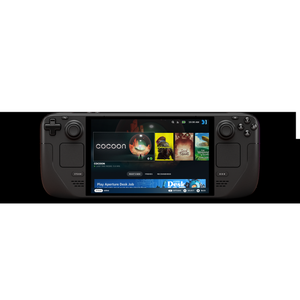
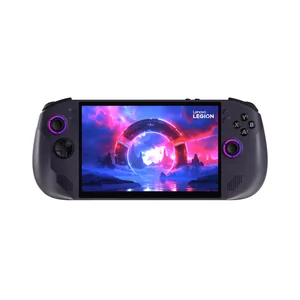
Steam library -> Steam Deck OLED ($1,199) or Lenovo Legion Go S with the official SteamOS variant ($1,199). Both run SteamOS, both natively access your Steam library and play the vast majority of Windows games via Proton compatibility. Steam Deck has the better display (OLED HDR) and the best repair story. Legion Go S has the larger 8-inch screen.
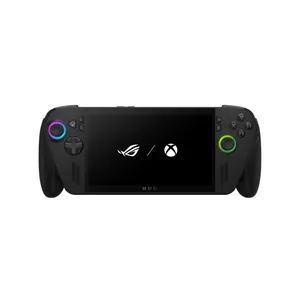
Game Pass / Xbox library -> ROG Xbox Ally X ($1,599). Microsoft and ASUS co-developed full-screen Xbox app integration on Windows 11. Game Pass Ultimate at $24.95/month is the value lever. The Lenovo Legion Go S Windows variant or MSI Claw 8 AI+ are alternative Windows handhelds but lack the Microsoft partnership integration.
Nintendo library -> Switch 2 ($699.95). The only path to Mario, Zelda, Pokemon, Smash Bros, and the upcoming Donkey Kong Bananza. Full backwards compatibility with Switch 1 games.
Multi-library / mixed ecosystem -> Steam Deck OLED is still the default choice because SteamOS handles non-Steam stores (Epic, GOG, Battle.net) with friction but works. Many enthusiasts own both a Steam Deck and a Switch 2 because the Nintendo exclusives are not available anywhere else.
If you do not already have a strong library preference, Steam Deck OLED is the default starting handheld in 2026. The Steam library is large, the OS is mature, the price is the lowest, and the upgrade path (eventually buy a Switch 2 for Nintendo games) makes sense.
SteamOS vs Windows 11 vs Switch OS
The operating system on a handheld matters more than the silicon underneath because handheld gaming is a more OS-sensitive use case than desktop gaming.
SteamOS (Steam Deck OLED, official Lenovo Legion Go S SteamOS variant) is a Linux-based gaming OS specifically designed for the form factor. Gamepad-first navigation, deep Steam integration, sleep-resume that actually works in 2-3 seconds, and the Proton compatibility layer that runs Windows games on Linux. Updates are handled by Valve and are non-disruptive. The community Bazzite Linux distro replicates SteamOS on competing handhelds for buyers who prefer SteamOS-style on Windows-handheld hardware.
Windows 11 (ROG Xbox Ally X, Lenovo Legion Go S Windows variant, MSI Claw 8 AI+) is desktop Windows on a handheld. Full x86 game compatibility including Game Pass, Epic Games Store, GOG, Battle.net. Trade-off is the friction of running a desktop OS on a touchscreen handheld: bloatware (most OEMs ship pre-installed apps that need disabling), slower boot, intermittent update interruptions, no proper sleep-resume that matches SteamOS or console quality. The ROG Xbox Ally X's full-screen Xbox app mode hides most of this for Game Pass-first use.
Nintendo Switch 2 system software is the lightest of the three: console-grade UI, instant resume, low-friction game launching, no Wi-Fi-related interruptions. Trade-off is the closed Nintendo ecosystem; you only get Nintendo-approved games.
For most buyers, SteamOS is the OS that stays out of the way. Windows 11 on handheld is improving but still requires more user maintenance. Switch OS is excellent for what it does but limited to the Nintendo library.
Display: OLED Wins, but Size and Resolution Trade Off
The Steam Deck OLED at 7.4 inches with 600 nits typical brightness and 1,000 nits HDR peak is genuinely the best display in the handheld category in 2026. OLED's perfect blacks and HDR peaks transform game presentation in a way LCD cannot match, especially for HDR-mastered titles.
The Switch 2 LCD at 7.9 inches with 500 nits and HDR support is a step down on contrast but a step up on size. The ROG Xbox Ally X IPS at 7 inches and 1080p resolution looks technically sharper than the Steam Deck OLED's 1280x800 but flatter in HDR content. The Lenovo Legion Go S and MSI Claw 8 AI+ both ship 8-inch IPS panels at QHD resolution, the largest displays in the category.
Resolution matters less than people assume. The Steam Deck's 1280x800 looks pixelly on paper but at handheld viewing distance (30-40cm from your eyes) it is sharp enough that the difference to QHD is hard to see in actual gameplay. Higher resolution costs battery and forces the GPU to work harder, dropping frame rates.
Refresh rate at 90Hz to 120Hz on every modern handheld is genuinely useful for menu navigation and esports gaming where high frame rates are sustainable. AAA games typically run at 30 to 60 FPS regardless.
Pick OLED if HDR matters to you. Pick larger LCD if screen real estate matters more. Both are legitimate trade-offs; do not let spec-counting reviews push you to one or the other.
Performance vs Battery: The Eternal Trade-Off
Every modern handheld lets you choose a power-mode setting that trades performance for battery life. There is no handheld where you can have both maximum frame rate and 6-hour AAA battery; physics does not allow it.
Real expectations for AAA gaming (Cyberpunk 2077, Black Myth Wukong, Spider-Man, Star Wars Outlaws): 2 to 4 hours unplugged, depending on power mode. Indie 2D gaming (Hades, Stardew Valley, Hollow Knight): 6 to 12 hours.
The Steam Deck OLED's silicon is three years old and runs AAA games at 30-40 FPS at lower settings, which is sustainable on battery for 3-4 hours. Newer handhelds (ROG Xbox Ally X, Lenovo Legion Go S, MSI Claw 8 AI+) run the same games at 50-60 FPS at higher settings but burn battery to do it; expect 2-3 hours unplugged at peak performance.
The Switch 2 is the most efficient because Nintendo first-party games are optimised specifically for the hardware. Mario Kart World runs 6 hours unplugged at full quality. Most third-party AAA ports run 3-4 hours.
If you primarily play handheld unplugged and want long sessions, Steam Deck OLED's mature silicon-OS optimisation gives you the best real-world battery for the AAA games it can run. If you primarily play docked or near a power outlet and want maximum performance, ROG Xbox Ally X or Legion Go S are the better picks.
Hall Effect Sticks vs Conventional: The Durability Question
Conventional thumbsticks (Steam Deck OLED, ROG Xbox Ally X, Lenovo Legion Go S, Switch 2) develop stick drift over time as the carbon contact pads inside the stick wear. Drift presents as the camera or character moving on its own without input, gets worse over months of use, and eventually requires stick replacement. The Switch 1 Joy-Con drift problem became a multi-year scandal that Nintendo eventually addressed with free out-of-warranty repair.
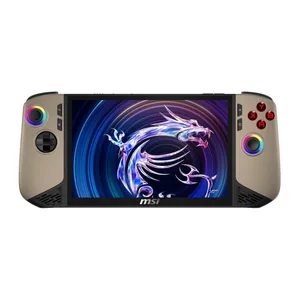
Hall effect thumbsticks (MSI Claw 8 AI+ specifically among the 2026 handhelds) use magnetic field detection with no physical contact. They do not drift. For a device you plan to use daily for 4-6 years, this is a real long-term reliability advantage that Steam Deck and ROG Xbox Ally X do not offer at the chip level.
The trade-off is purchase price (MSI Claw 8 AI+ is $1,499 versus Steam Deck OLED at $899) and OS (Windows 11 instead of SteamOS). For buyers specifically prioritising stick durability over price or OS preference, MSI Claw 8 AI+ is the right call. For everyone else, conventional sticks plus eventual repair (around $30-60 for replacement modules on Steam Deck via iFixit) is acceptable.
Replacement-stick markets exist for every major handheld; Steam Deck has the best DIY repair story (iFixit kit at $30-50, replacement takes 30-60 minutes with basic tools). ROG Xbox Ally X and Legion Go S require more disassembly but are doable. Switch 2 Joy-Con 2 are designed for easier swap than Switch 1, but Nintendo's first-party drift policy will take time to develop.
Australian Price Tiers and Where to Buy
Budget tier ($699 to $899): Switch 2 ($699.95) and Steam Deck OLED ($1,199). The two best entry points to handheld gaming in Australia. Switch 2 for Nintendo exclusives, Steam Deck for Steam library.
Mid-range ($1,000 to $1,500): Lenovo Legion Go S ($1,199 routinely on sale, $1,099 via Lenovo Direct eCoupon), MSI Claw 8 AI+ ($1,499). Larger displays, more powerful silicon, Windows 11 with Game Pass support.
Premium ($1,500+): ROG Xbox Ally X ($1,599). Microsoft co-developed Xbox app integration, AMD Ryzen Z2 Extreme, the most powerful handheld in 2026.
Where to buy: JB Hi-Fi for all major brands; price-leader on most. EB Games for trade-in deals (good for buyers swapping older handhelds or controllers). Steam Direct Australia for Steam Deck (only official Valve channel). Microsoft Store Australia for ROG Xbox Ally X (matches JB on price). Lenovo Direct for Legion Go S (eCoupon discounts year-round; SteamOS variant only available here). Centrecom and Mwave for MSI products and gaming accessories. Avoid grey-market US/EU imports because PSN/Xbox/Steam region matters and Australian power supplies differ.
Subscription value adds: Game Pass Ultimate ($24.95/month) is essentially the value proposition for ROG Xbox Ally X. Nintendo Switch Online ($35/year basic, $99/year Expansion Pack) is required for Switch 2 multiplayer. Steam Deck has no equivalent subscription requirement; you buy games or play your existing library.
ACL Coverage and Repairability
The ACL's reasonable-durability standard for a $700-$1,600 handheld is 4 to 6 years. Manufacturers' 1-year warranties are the floor; out-of-warranty hardware failures within the reasonable-durability window are grounds for retailer-led claims under the consumer guarantee.
Steam Deck has the best repairability in the category (iFixit 9/10) and Valve's official iFixit partnership means genuine parts are available globally. SSD is M.2 user-replaceable, joysticks are modular, battery is screw-mounted. Out-of-warranty repairs at Steam Direct Australia are reasonable ($200-300 for common failures).
Switch 2 repairability is around 6/10. Joy-Con 2 are designed for easier swap than Switch 1; Nintendo's free Joy-Con drift repair policy from Switch 1 is expected to extend to Switch 2 if drift issues emerge.
ROG Xbox Ally X, Lenovo Legion Go S, MSI Claw 8 AI+ all sit at 6-7/10 repairability. SSD M.2 is user-replaceable on all three. Joystick replacement requires more disassembly than Steam Deck. ASUS, Lenovo, and MSI all have Australian service networks but turnaround times vary; Centrecom and Mwave often handle ACL claims more reliably than direct manufacturer RMA when claims are slow-walked.
For daily-carry handhelds in households with kids, accidental damage cover is worth considering. Microsoft Complete and ASUS ADP at $89-129 for 1-2 years cover drops and spills the ACL does not.
My Top Picks
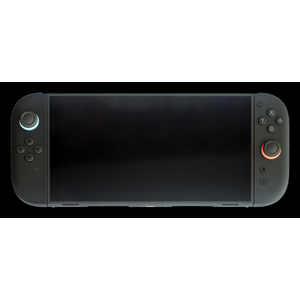
Ready to pick one?
Check out my ranked list with scores, prices, and AU availability.
See the Best Handheld Gaming