How to Choose a Fitness Tracker - Buyer's Guide
Last updated: 25 Apr 2026
Smartwatch vs Fitness Tracker: Different Devices for Different Buyers
The wearables market in 2026 splits into two product types that get marketed together but solve different problems.
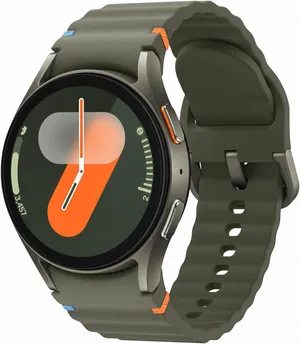
Smartwatch (Apple Watch Series 10, Apple Watch Ultra 3, Samsung Galaxy Watch 7, Google Pixel Watch 3): bright AMOLED display, full smartphone notifications, app store with hundreds of native apps, voice assistant, contactless payments, music storage, cellular connectivity option. Battery typically 1-3 days. Best for buyers who want the watch as a phone-extension and accept daily charging.
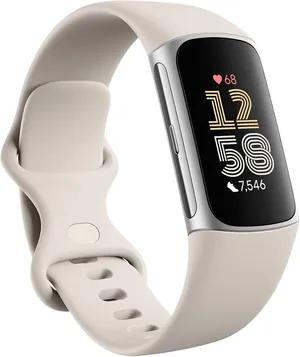
Fitness tracker (Garmin Forerunner / Fenix / Vivoactive, Fitbit Charge 6 / Sense 2, Polar Pacer, Coros Pace 3): less bright display (often MIP transflective), focused on sport tracking, GPS accuracy, multi-day to multi-week battery life. Best for buyers who care about training metrics and battery longevity over notification convenience.
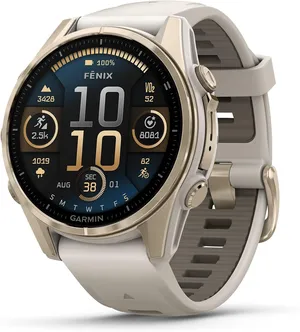
Garmin specifically straddles both categories: Forerunner 165 is a runner's tracker; Fenix 8 is both a high-end smartwatch and a serious training tool. The Apple Watch Ultra 3 also straddles: serious training metrics with full smartwatch features.
If you want notifications and apps with fitness tracking secondary, smartwatch tier. If you want training metrics and multi-day battery with notifications secondary, fitness tracker tier. Many serious athletes own both: a smartwatch for daily wear and a Garmin for training.
Phone Ecosystem Compatibility
Smartwatch ecosystem compatibility is more locked than smartphone in 2026. Buying a watch that does not match your phone is genuinely painful.
Apple Watch requires an iPhone (any iPhone running iOS 18+). Will not pair with Android, period. If you switch to Android later, the Apple Watch becomes a $400-1,000 paperweight.
Samsung Galaxy Watch works with Android (full features) and iPhone (limited features, no SMS sending). Best with Samsung Galaxy phones for One UI ecosystem features.
Google Pixel Watch works with Android (full features) and iPhone (limited features). Best with Pixel phones for Google Health and Fitbit ecosystem integration.
Garmin watches work with iPhone and Android equally well via the Garmin Connect app. The least platform-locked of any watch brand.
Fitbit works with iPhone and Android equally. Now Google-owned and integrating with Pixel ecosystem.
For buyers who might switch phone platforms in the watch's lifetime, Garmin or Fitbit are safer picks. For buyers committed to Apple or committed to Android, the matching first-party watch is better integrated.
Sensor Quality: What Actually Matters
Modern fitness trackers and smartwatches in 2026 have largely converged on a standard sensor suite: optical heart rate, pulse oximeter (SpO2), ECG (in higher tiers), GPS (built-in or paired-phone), accelerometer, gyroscope, ambient light, skin temperature.
Where sensor quality actually differs:
Heart rate accuracy during exercise: Garmin Elevate Gen 4 and Polar Precision Prime are the most accurate optical heart rate sensors for high-intensity exercise (cycling, running, HIIT). Apple Watch's optical sensor is excellent for steady-state activity but can lag during quick changes in heart rate. For accuracy under all conditions, a chest strap (Polar H10, Garmin HRM-Pro) paired to the watch is still the gold standard.
GPS accuracy: dual-band L1+L5 GPS is the 2024+ standard for accuracy in urban canyons (city running, dense bushland). Garmin Forerunner 265, Garmin Fenix 8, Apple Watch Ultra 3, Samsung Galaxy Watch 7 Ultra all support dual-band. Cheaper models (Apple Watch Series 10, Fitbit Charge 6, base Garmin Forerunner) use single-band L1 only, which drifts in tunnels and tall buildings.
SpO2 and ECG: Apple Watch and Samsung Galaxy Watch have FDA-cleared ECG functionality (and TGA-approved in Australia). Useful for atrial fibrillation detection. Less commonly relevant for typical buyers but a real value for cardiac patients.
Sleep tracking: every modern watch tracks sleep stages, but interpretations vary widely. Whoop and Garmin tend toward more pessimistic readings; Apple and Fitbit toward more generous. Use trends over time rather than absolute numbers.
Battery Life Reality
Battery life is the single biggest differentiator between smartwatch and fitness tracker categories.
Smartwatch tier: Apple Watch Series 10 (18 hours typical, 36 hours low-power), Apple Watch Ultra 3 (36 hours typical, 72 hours low-power), Samsung Galaxy Watch 7 (40 hours), Pixel Watch 3 (24 hours typical, 36 hours always-on disabled). Daily charging for most smartwatches; every-other-day for the Ultra-class.
Fitness tracker tier: Garmin Forerunner 165 (11 days), Garmin Forerunner 265 (13 days), Garmin Fenix 8 (16 days), Fitbit Charge 6 (7 days), Polar Pacer (7 days), Coros Pace 3 (24 days). Multi-day to multi-week without charging.
For weekend backpacking and travel, the Garmin and Coros battery life is genuinely transformative; you do not bring a charger. For daily wear with a charger by the bedside, smartwatch battery is fine.
Always-on display reduces battery materially across all platforms. Apple Watch with always-on enabled drops from 18 hours to around 12. Disable always-on for trips where charging is hard.
Australian Specifics
Apple Pay works with every bank in Australia in 2026 on Apple Watch with cellular. Samsung Pay works with every major bank on Galaxy Watch. Google Pay on Pixel Watch works with every major bank.
Cellular variants (Apple Watch Cellular, Samsung Galaxy Watch LTE, Google Pixel Watch LTE) require a separate carrier plan typically $5-10/month on Telstra, Optus, or Vodafone. Useful for runners who do not want to carry a phone; for daily wear, paired-phone Bluetooth is fine and saves the monthly cost.
Garmin Pay (the only Garmin payment platform) has limited Australian bank support; works with NAB, ANZ, Westpac in 2026 but not all smaller banks. Fitbit Pay similarly limited. Apple Pay and Google Pay have the broadest Australian bank coverage.
Strava and TrainingPeaks integration: every modern fitness watch syncs to Strava. TrainingPeaks (used by serious endurance athletes) has best integration with Garmin and Polar.
Australia-specific features: Apple Watch's Crash Detection is operational in Australia (auto-calls 000 after a fall or crash if you do not respond). Garmin's Incident Detection is operational. Both are genuinely useful for runners and cyclists in remote areas.
Australian Price Tiers in 2026
Entry fitness tracker ($150 to $300): Fitbit Inspire 3 ($149), Fitbit Charge 6 ($249), Garmin Vivosmart 5 ($249), Xiaomi Mi Band 9. Basic sensor suite, single-band GPS, multi-day battery, slim form factor. Right tier for casual fitness tracking.
Mid-tier smartwatch ($350 to $700): Apple Watch SE 2 ($349), Apple Watch Series 10 ($579), Samsung Galaxy Watch 7 ($529), Google Pixel Watch 3 ($579), Garmin Forerunner 265 ($699). Full smartwatch features, AMOLED displays, dual-band GPS on some, ecosystem integration.
Premium smartwatch / training watch ($700 to $1,500): Apple Watch Ultra 3 ($1,399), Garmin Forerunner 965 ($999), Garmin Fenix 8 ($1,499), Samsung Galaxy Watch 7 Ultra ($1,099). Multi-day battery, premium materials (titanium, sapphire), dual-band GPS, advanced training metrics.
Sales matter. JB Hi-Fi, Apple Store Australia, Samsung Direct, and Rebel Sport all run wearable sales around EOFY (June), Black Friday (November), Boxing Day (December). Apple Watch rarely discounts more than 10% but JB Hi-Fi runs occasional $50-100 off promos.
Where to Buy and ACL Coverage
ACL for fitness trackers and smartwatches follows the standard retailer-first rule. Reasonable-durability standard for a $400-700 watch is 4-5 years; for $1,000+ premium watches is 5-7 years.
Apple Store Australia for Apple Watch: rarely cheapest, cleanest warranty path. AppleCare+ at $79/year for Series, $99/year for Ultra adds accidental damage cover.
Samsung Australia direct for Galaxy Watch: aggressive trade-in programmes for older Galaxy Watch hardware.
Google Store Australia for Pixel Watch: direct channel, sometimes only channel for new launches.
Garmin Australia direct for Garmin: rarely cheapest, but cleanest warranty path. Garmin's Australian service is solid; warranty repairs route through authorised channels.
JB Hi-Fi stocks all major brands at competitive pricing.
Rebel Sport, Anaconda, BCF stock outdoor and running watches (mostly Garmin) at competitive pricing.
Stick to Australian-stocked listings to avoid grey-market fitness watches that may not have Australian TGA approval for cardiac features. Grey imports are the main risk with this category.
Battery degradation is the most common long-term failure. The ACL's reasonable-durability standard means a sub-80%-capacity battery within 3-4 years on a $500+ watch is grounds for retailer-led service or replacement claim.
My Top Picks
Ready to pick one?
Check out my ranked list with scores, prices, and AU availability.
See the Best Fitness Trackers & Smartwatches