How to Choose a Smart Speaker - Buyer's Guide
Last updated: 25 Apr 2026
The Voice Assistant Decision Comes First
The single most important decision in smart speaker buying is which voice assistant ecosystem you want to live with. This locks you into a smart-home platform for the next 5-7 years and is much harder to switch later than the speaker hardware itself.
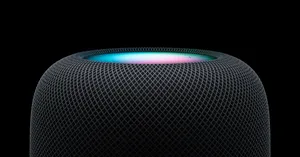
Apple Siri on HomePod 2 and HomePod mini ties into HomeKit (Apple's smart home framework), Apple Music, Apple Podcasts, and the entire iPhone / iPad / Mac ecosystem. Best if you already have an iPhone and prefer Apple's privacy-first stance (queries processed on-device where possible). Trade-off: Siri's general knowledge and conversational ability still trail Alexa and Google Assistant. HomeKit's compatible-device list is the smallest of the three platforms in Australia.
Amazon Alexa on Echo and Echo Dot ties into the Amazon ecosystem (Prime Music, Amazon Shopping, Audible) and the largest smart-home compatibility list in Australia. Best for buyers who want the broadest smart-device compatibility. Trade-off: aggressive ad personalisation, Amazon's data collection is the most extensive of the three platforms.
Google Assistant on Nest Hub, Nest Audio, Nest Mini ties into Google services (Google Calendar, Gmail, YouTube Music, YouTube), Chromecast streaming, and Google Home smart-home framework. Best for buyers who live in Google services and want the best general-knowledge voice assistant in 2026. Trade-off: Google's ad targeting; the Nest hardware lineup has been thinner since the 2024 product reshuffle.
If you do not already have a smart-home preference, Google Assistant is the default recommendation in 2026 because the conversational quality is best and the smart-home compatibility is broad enough for most needs.
Sound Quality vs Voice Quality: They Are Different Things
Smart speakers in 2026 fall on a spectrum from voice-first (lightweight speakers built primarily for voice queries with adequate music playback) to audio-first (speakers built primarily for music quality with voice assistant added).
Voice-first: HomePod mini ($149), Echo Dot ($79), Nest Mini ($65). Single small driver, mostly mono, designed for kitchen / bedroom / hallway placement where voice queries dominate. Music playback is fine for casual background but lacks bass extension and stereo separation. Sound quality is roughly equivalent to a decent Bluetooth speaker.
Mid-tier: Echo ($199), Nest Audio ($149), HomePod 2 ($479). Larger drivers, dedicated tweeter and woofer in some models, room-filling sound suitable for primary listening in a small-to-medium room. HomePod 2 specifically has computational room sensing that adapts EQ to your room acoustics, which is a meaningful upgrade.
Audio-first with voice: Sonos Era 100 ($429), Sonos Era 300 ($799), Sonos Five ($799). Sonos's audio engineering is materially better than Apple's or Google's at equivalent price. Era 300 specifically supports Dolby Atmos for spatial audio playback. Trade-off: Sonos's voice assistant integration uses Sonos Voice (limited features) or Alexa (built in); no Siri or Google Assistant native support.
For voice queries primarily, any voice-first speaker in the $80-150 range is fine. For music quality, Sonos Era 100 at $429 is the best value in the category. For Apple ecosystem buyers who want both, HomePod 2 stereo pair ($958 for two) hits well above its weight.
Multi-Room Audio: Where Sonos Still Leads
Multi-room audio (playing the same music synced across multiple speakers in different rooms) is the under-rated smart speaker feature for households that actually use it.
Sonos remains the gold standard for multi-room. Sonos Net wireless protocol delivers tight sync across any number of Sonos speakers across rooms with no audible delay. The Sonos app is the best multi-room control interface in any platform. Trade-off: Sonos costs more per speaker; a four-room Sonos setup is $1,500-2,000.
HomePod / HomePod mini multi-room via AirPlay 2 works well across Apple speakers and any AirPlay 2 compatible third-party speakers. Slightly less tight sync than Sonos but adequate for casual whole-home audio. Apple TV 4K and HomePod Stereo Pair as a Home Theater setup is genuinely impressive.
Echo multi-room via Alexa Groups works fine across multiple Echo speakers. Limited sync precision; some users report subtle drift in larger setups.
Nest multi-room via Google Cast and speaker groups works fine; comparable to Echo.
For households that genuinely use multi-room audio (cooking with music in the kitchen extending to the dining room, party setups), Sonos earns its premium. For most households, Apple HomePod multi-room or Echo speaker groups are adequate.
Smart Home Compatibility: The Matter Promise
Matter is the cross-platform smart home standard that became practical in 2024-2025. Matter-compatible devices work with Apple HomeKit, Amazon Alexa, Google Home, and Samsung SmartThings simultaneously, breaking the historical platform silos.
Every smart speaker in 2026 supports Matter as a controller. HomePod 2 and HomePod mini are Matter controllers and Thread border routers. Echo and Echo Dot (4th gen and newer) are Matter controllers and Thread border routers. Nest Hub Max and Nest Mini are Matter controllers and Thread border routers.
The practical implication: in 2026, you can buy a smart bulb, smart plug, or smart sensor that works with all your speakers regardless of platform, as long as the device is Matter-certified. Look for the Matter logo on packaging. Older non-Matter devices remain locked to specific platforms (a Hue bulb on HomeKit; an old Tuya plug on Alexa only).
The remaining platform differences in 2026 are mostly UI: HomeKit's Apple Home app is cleaner than Google Home or Alexa. Alexa Routines are the most powerful automation system. Google Home's automations have caught up but trail Alexa.
Australian Streaming Service Integration
Smart speakers in Australia need to handle the Australian streaming landscape, which differs from US-defaults. Confirm before buying.
Music streaming: Spotify works on every smart speaker in 2026. Apple Music works native on HomePod, AirPlay-cast on others. YouTube Music works native on Nest, AirPlay-cast on HomePod, voice-cast on Echo. Tidal works on most via voice command or AirPlay/Cast. Amazon Music works native on Echo, voice-cast on others. Spotify Connect or AirPlay 2 are the universal solutions if your specific service is not natively supported.
Podcast: Apple Podcasts works native on HomePod, AirPlay on others. Spotify podcasts work universally. Pocket Casts works via voice command on Google Assistant.
Live Australia radio (ABC, Triple J, commercial FM): TuneIn and iHeart work universally. ABC Listen app integration is best on Google Nest in Australia; native voice request to play Triple J works.
Audiobooks: Audible works native on Echo (Amazon ownership), via voice on Google Nest, via AirPlay on HomePod. Spotify audiobooks work universally.
For Australia users who specifically use ABC Listen and Apple Music, HomePod is the cleanest fit. For Spotify-first users, any speaker is fine. For Audible heavy users, Echo wins on integration.
Australian Price Tiers in 2026
Voice-first ($65 to $200): Nest Mini ($65), Echo Dot ($79), HomePod mini ($149), Echo ($199). Adequate music playback, full voice assistant features. Best for second-room placement (kitchen, bedroom, bathroom).
Mid-tier audio ($150 to $500): Nest Audio ($149), Echo Studio ($349), HomePod 2 ($479), Sonos Era 100 ($429). Real music quality, room-filling sound, full smart home capability. Right tier for primary lounge / kitchen smart speaker.
Premium audio ($500 to $1,000): Sonos Era 300 ($799), Sonos Five ($799), B&W Zeppelin ($999), Bose Home Speaker 500 ($699). Audiophile-tier sound quality with smart speaker convenience. Right tier for buyers who would otherwise consider a separate stereo system.
Stereo pair upgrades: two HomePod 2 ($958) or two Sonos Era 100 ($858) deliver genuinely impressive stereo separation and room-filling sound. Often the right choice over a single premium speaker.
Sales matter. JB Hi-Fi, Officeworks, and direct manufacturer stores all run smart speaker sales around EOFY (June), Click Frenzy (May, November), Black Friday (November), and Boxing Day (December). HomePod and HomePod mini specifically rarely discount more than 10-15%; Sonos discounts more aggressively at EOFY.
Where to Buy and ACL Coverage
Australian Consumer Law for smart speakers follows the same retailer-first rule. Reasonable-durability standard for a $400-500 smart speaker is 4-6 years.
Apple Store Australia for HomePod / HomePod mini: rarely cheapest, cleanest warranty path. AppleCare+ at $39/year for HomePod adds accidental-damage cover.
Sonos Australia direct for Sonos: aggressive trade-in programmes for older Sonos hardware. Sonos's Australian service network is solid; warranty repairs route through authorised channels.
Echo line: JB Hi-Fi and Officeworks usually have the best price, and stock is consistent.
Google Store Australia for Nest: direct channel; matches retailer pricing.
JB Hi-Fi stocks all major brands. Care Plus rarely worth it on smart speakers; ACL covers most failure modes.
Officeworks, The Good Guys, Harvey Norman all stock smart speakers at competitive pricing. Acceptable for ACL claims through familiar channels.
My Top Picks
Ready to pick one?
Check out my ranked list with scores, prices, and AU availability.
See the Best Wireless Speakers (Home)