How to Choose a Game Console - Buyer's Guide
Last updated: 25 Apr 2026
The First Choice Is the Exclusive Library
The console you buy is the gateway to a specific exclusive game library. Hardware specs are secondary because all current-generation consoles deliver good visuals and good performance; the actual buying decision is which exclusive games you want to play.
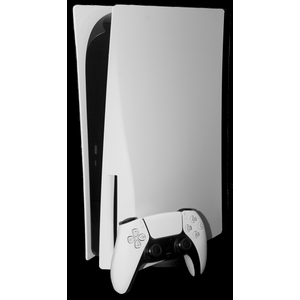
PlayStation exclusives (PS5 Slim or PS5 Pro): God of War Ragnarok, Marvel's Spider-Man 2, Horizon Forbidden West, Stellar Blade, Final Fantasy XVI, Gran Turismo 7, the upcoming Gran Turismo 6 (later 2026), and the upcoming Marathon. Sony's first-party studios output is the strongest in any console ecosystem in 2026. None of these games are on Xbox or Switch 2.
Xbox / Microsoft exclusives (Xbox Series X or Xbox Series S, plus Game Pass Ultimate subscription): Forza Motorsport, Forza Horizon 5, Halo Infinite (and rumoured next mainline Halo), Gears of War: E-Day, Sea of Thieves, Hi-Fi Rush, Pentiment, Hellblade II. Plus the entire Bethesda catalogue (Starfield, Doom Eternal, the upcoming Elder Scrolls VI) and the Activision Blizzard catalogue (Call of Duty, Diablo IV, World of Warcraft).
Nintendo exclusives (Switch 2): Mario Kart World (the launch title), Super Mario Bros. Wonder, The Legend of Zelda: Tears of the Kingdom, the upcoming Donkey Kong Bananza (later 2026), the next mainline Pokemon, and decades of Nintendo first-party catalogue going back to Switch 1 (full backwards compatibility).
Many enthusiast buyers own at least two consoles because the libraries are genuinely exclusive. A typical setup: PS5 (Slim or Pro) for Sony exclusives, Switch 2 for Nintendo exclusives. Xbox Series X is the right addition if you specifically want Game Pass Ultimate or the Microsoft first-party catalogue.
PS5 Pro vs PS5 Slim: When the Pro Earns the Premium
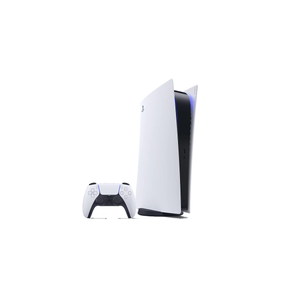
The PS5 Pro at $1,399.95 is $400 more than the PS5 Slim Disc edition at $799.95. Both run the same exclusive games on the same online ecosystem with the same DualSense controller. The Pro adds: significantly upgraded GPU (RDNA 3 with 16.7 TFLOPS vs RDNA 2 with 10.3 TFLOPS), PSSR (PlayStation Spectral Super Resolution) AI upscaling, doubled SSD storage (2TB vs 1TB), and faster SSD throughput (12 GB/s vs 5.5 GB/s).
Buy the Pro if: you have a 4K HDR TV with HDMI 2.1 capable of accepting the enhanced output, you specifically play Pro-enhanced games (around 60 titles in early 2026 and growing, including GT7 with Pro patch and the upcoming GT6), and you notice the visual upgrade in HDR-capable games.
Buy the PS5 Slim if: you have a 1080p or 1440p TV, you do not particularly chase 4K HDR visuals, you want to save $400 to spend on games, or you specifically want the disc drive included at no extra cost (the Pro is digital-only by default; disc drive is $179 extra).
For most PlayStation buyers, the Slim is the right answer at $400 less. For visuals-first 4K HDR TV owners, the Pro earns its premium.
Xbox Series X vs Series S: 4K vs 1440p Decision
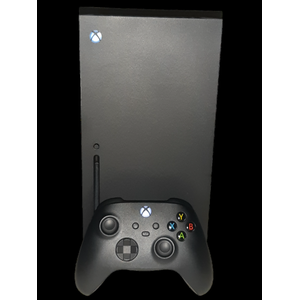
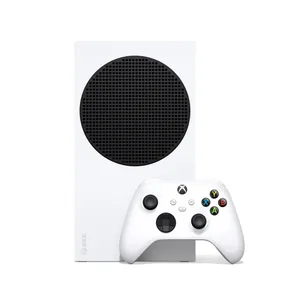
Xbox Series X at $799 and Xbox Series S at $499 share the same Game Pass Ultimate library (every Xbox game runs on both consoles via Smart Delivery; the better version downloads to your console automatically). The hardware difference is significant: Series X has 12 TFLOPS GPU and 16GB RAM and targets 4K resolution; Series S has 4 TFLOPS GPU and 10GB RAM and targets 1440p resolution.
Buy Series X if: you have a 4K HDR TV with HDMI 2.1, you want maximum Xbox visuals, or you want the included disc drive (Series S is all-digital).
Buy Series S if: you have a 1080p or 1440p TV, you primarily live in Game Pass and do not buy disc games, you want the cheapest path into next-generation console gaming, or you want a secondary console for a kid's room or second TV.
The Game Pass Ultimate value math at $24.95 per month is the actual reason to choose Xbox over PlayStation regardless of which Xbox tier. Three years of Game Pass Ultimate is $898; that gets you hundreds of AAA games for less than the cost of buying 10 new releases at full price. PlayStation has no equivalent subscription value; PS Plus Premium at $179.95/year is more expensive for less library.
Switch 2: The Nintendo Hybrid Decision
Nintendo Switch 2 at $699.95 is the only path into Nintendo first-party games. If you want Mario, Zelda, Pokemon, Smash Bros, Animal Crossing, or the upcoming Donkey Kong Bananza, this is the only way. PlayStation does not have these games. Xbox does not. PC emulation is grey-area legal and lags 6-12 months behind launch.
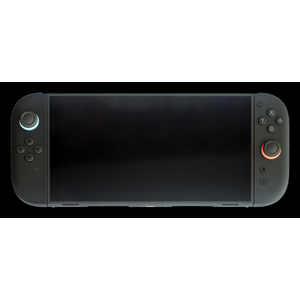
The Switch 2 hybrid form factor (handheld plus dock to TV) is unique. In handheld mode the 7.9-inch 1080p HDR display at 120Hz is genuinely good. Docked, the console outputs up to 4K 60FPS depending on the game (Mario Kart World runs 1440p 60FPS docked).
Full backwards compatibility with Switch 1 games (digital and physical) is the under-appreciated launch decision. Existing Switch owners do not lose their library when they upgrade.
Many buyers own a Switch 2 alongside a PS5 or Xbox because the Nintendo library is exclusive. Budget consideration: if you want both, PS5 Slim ($799.95) plus Switch 2 ($699.95) is $1,499.90, which is more than a single PS5 Pro at $1,399.95. The two-console setup gives you both libraries; the single Pro setup gives you only one.
Subscription Services: Game Pass vs PS Plus vs Nintendo Switch Online
Console subscription services are the second-largest ongoing cost after the console itself. Different value propositions across the three ecosystems.
Xbox Game Pass Ultimate ($24.95/month or $179/6 months in Australia) provides access to hundreds of AAA games including same-day Microsoft first-party releases, the Bethesda catalogue, the Activision Blizzard catalogue, and Xbox Cloud Gaming for streaming on phones and tablets. Genuine value if you play 5+ AAA games per year.
PS Plus Essential ($89.95/year) is the basic tier, includes online multiplayer and 2-3 free games per month. PS Plus Extra ($134.95/year) adds a catalogue of 400-plus PlayStation games. PS Plus Premium ($179.95/year) adds streaming and the classic PlayStation games library. The three-tier structure is more expensive and offers less library than Game Pass Ultimate.
Nintendo Switch Online ($35/year basic) provides online multiplayer and access to the NES and SNES libraries. Nintendo Switch Online Expansion Pack ($99/year) adds the N64, Game Boy Advance, GameCube, and Sega Genesis libraries plus DLC for some Nintendo first-party games. Required for Switch 2 online multiplayer.
Total ongoing console cost over 3 years: PS5 Slim Disc at $799.95 plus PS Plus Premium at $539.85 = $1,339.80. Xbox Series X at $799 plus Game Pass Ultimate at $898.20 = $1,697.20 (more expensive but materially more games included). Switch 2 at $699.95 plus Nintendo Switch Online Expansion at $297 = $996.95 (cheapest, but you buy individual games at $89.95 each on top).
Game Pass Ultimate offers the best games-per-dollar value over time. PS Plus Premium offers more curated library access for buyers who specifically want Sony exclusives. Nintendo Switch Online is the cheapest but you still buy individual games separately.
Disc vs Digital: The Second-Hand Market Question
The disc-versus-digital decision is mostly about whether you want access to the second-hand game market. Disc edition consoles let you buy physical games used (EB Games, Beat the Bomb, eBay AU listings), trade games in for credit, and keep games even when subscription services drop them. Digital edition consoles are PSN/Xbox Store only.
Australian second-hand console game prices typically run 30-50 percent below retail PSN/Xbox Store pricing. For buyers who play 5+ AAA games per year and trade them in after finishing, the disc edition pays for itself quickly.
For buyers who live entirely in subscription services (Game Pass Ultimate or PS Plus Premium) or who only buy from PSN/Xbox Store anyway, the digital edition is fine and saves $100-120.
The PS5 Pro is digital-only by default; Sony charges $179 for the optional disc drive (proprietary connector). The PS5 Slim is sold in both disc ($799.95) and digital ($679.95) editions. Xbox Series X always includes the disc drive at $799; Xbox Series S is digital-only at $499. Nintendo Switch 2 uses physical game cards (a different physical format than discs but same second-hand market dynamic).
Where to Buy and ACL Coverage
The ACL's reasonable-durability standard for a $499-$1,200 console is 5-8 years. Manufacturers' 1-year warranties are the floor; out-of-warranty hardware failures within the reasonable-durability window are grounds for retailer-led claims under the consumer guarantee.
JB Hi-Fi is the price leader for all major consoles in Australia. Best Australian retail service network for gaming hardware.
EB Games offers trade-in programmes that drop effective price by $100-300 for buyers trading older console hardware. Strong in-store warranty and gaming-specific support.
Big W and Target Australia run aggressive bundle pricing around Click Frenzy (May, November) and Boxing Day (December). Bundles often include extra controllers or game vouchers worth $50-100 over the basic console price.
Microsoft Store Australia for Xbox: matches JB on price for the consoles. Microsoft Complete extended warranty at $69-89 is good value on Xbox Series S, less compelling on Series X.
Sony PlayStation Store Australia for PlayStation: rarely cheapest, available for direct console purchases including Pro disc drive and accessories.
Nintendo eShop Australia for Switch 2 digital purchases. Stock the console through Nintendo Direct for Australian warranty coverage.
Avoid grey-market US/UK/Japan imports because PSN, Xbox Live, and Nintendo eShop account regions all matter for game purchases, and the Australian power supply rating differs from US.
For console hardware failures within the reasonable-durability window (5-8 years), claim retailer-first via the original purchase invoice. Sony, Microsoft, and Nintendo all have Australian service networks for out-of-warranty repairs at reasonable cost; common console repairs (HDMI port replacement on PS5, controller drift on Switch 2) typically cost $100-300 if outside warranty.
My Top Picks
Ready to pick one?
Check out my ranked list with scores, prices, and AU availability.
See the Best Game Consoles