How to Choose an Electric Heater - Australian Buyer's Guide
Last updated: 22 May 2026
The Four Heater Types and What Each One Is Actually For
Four formats, four jobs. Use this to pick the right tool before you start comparing prices.
Ceramic fan heaters
Pros: Fast warm-up in about two minutes, light, cheap to buy, easy to move room to room.
Cons: Fan noise (45 to 55 dB constant), dries the room out by 10 to 20 per cent humidity overnight, needs the fan running to move air.
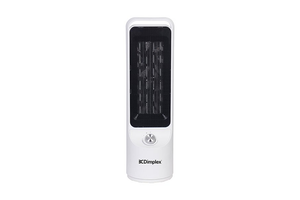
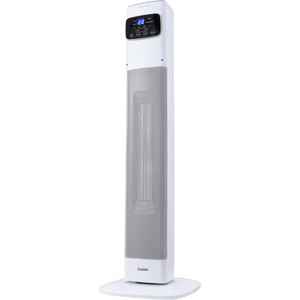
Good for bathrooms and home offices where you want warmth before you finish your coffee. The Dimplex 2kW Ceramic (DHCERA20M) and Goldair Smart 2400W Tower (GCT330) are both ceramic fan units. The Goldair throws warm air higher because it sits taller; the Dimplex is the compact pick for under a desk.
Oil-filled column heaters
Pros: Silent. Hold heat for an hour or two after they switch off, so cycling costs less in practice. No fan motor to fail, which is why they outlast every other format.
Cons: Slow to warm a cold room (twenty minutes plus), heavy, ugly. Bigger physical footprint than a ceramic.
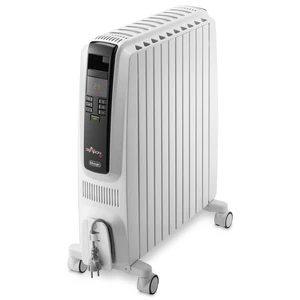
The correct pick for bedrooms and living rooms in cold-climate Australian cities like Melbourne and Hobart. The DeLonghi Dragon 4 (TRD42400ET) is the current Australian hero, around $279 most of winter, dropping to $229 on sale roughly twice a year.
Panel heaters
Pros: Thin, wall-mountable, look tidy. Decent for keeping a small space above freezing without dominating the room visually.
Cons: Slow and weak (usually 400 to 1500W), can't carry a main room on their own, often badly thermostatted.
Supplementary heat only. Make sense in a bathroom that just needs to not be freezing in July. Skip them for primary heating. If a panel heater is your only heat source in a Melbourne winter living room, you bought the wrong product.
Radiant bar heaters
Pros: Targeted warmth on a body within line of sight, very fast, low buy cost.
Cons: Heat the object in front of them, not the room. Glow hot enough to be a real burn risk near pets and kids. No thermostat on the cheap ones.
Garage, workshop, or outdoor patio kit. Not what you want for indoor living. Bunnings sells them cheap because tradies buy them to keep their hands warm in winter sheds, and that is the use case.
2400W Is the Ceiling, Do Not Believe 3000W Claims
Australian standard wall outlets are 10A at 240V. That is 2400W maximum. Anyone selling a 3000W electric heater with a normal plug is either lying to you or shipping a 15A plug that will not fit a standard wall socket. 15A plugs have a wider earth pin and need a specific 15A outlet, which most homes do not have outside of laundry and garage locations.
This matters because electric heating is a pure wattage-to-warmth conversion. 2400W will give you exactly the same heat output whether it comes from a Dyson, a Goldair, or a $40 no-name from Kmart. What changes with price is how efficiently the heat is distributed, whether the thermostat is accurate, how quiet the fan is, and whether the build lasts three winters or seven.
Room Size and Realistic Coverage
Manufacturer coverage claims are measured in a sealed, insulated test room. Australian homes almost universally leak. Single-pane windows, no insulation, gap under the door, uninsulated floor. Scale the claim down by 30 to 40 per cent for an honest number.
Small bedroom up to 15 square metres, mild climate: any 2400W unit will handle it. Prefer ceramic for speed or oil column for overnight quiet.
Medium living room 20 to 30 square metres, temperate climate (Sydney, Brisbane, Perth): a ceramic tower will cover it. Oil column will too but takes longer to come up to temperature.
Medium living room 20 to 30 square metres, cold climate (Melbourne, Hobart, Canberra, Adelaide, Blue Mountains): you want 2400W oil column. A ceramic unit will cycle constantly and never fully warm the room. The Dragon 4 TRD42400ET is the right answer.
Open-plan or greater than 40 square metres: stop shopping for a portable electric heater. You need ducted, a heat pump, or a reverse-cycle split. Electric portables are top-up devices, not primary heat sources for open-plan.
Noise and Where You Will Put It
Ceramic fan heaters are 45 to 55 dB. The fan runs continuously. That is fine in a home office. It is noticeable in a quiet bedroom, especially as the thermostat cycles the fan up and down.
Oil column heaters are silent. No fan. The only sound is the occasional tick of the metal expanding as it warms. If bedroom quiet is your priority, this is the only answer.
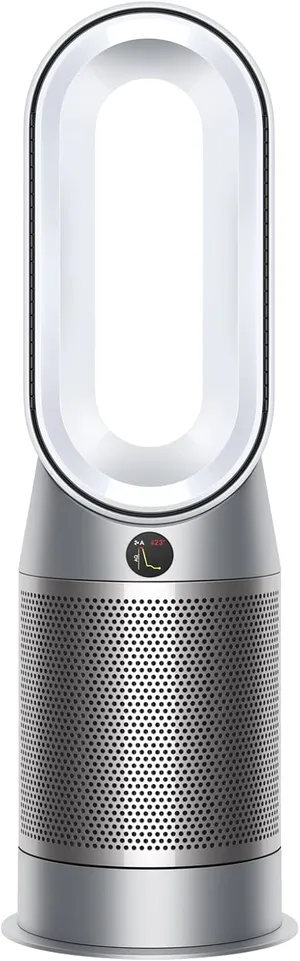
Dyson HP07 is a bladeless fan heater. Quieter than a ceramic unit on its low setting, but at $899 you are paying for the HEPA filter and the year-round cooling function, not the heating performance.
Running Costs at Average Australian Electricity Prices
At roughly $0.32 per kWh average Australian retail electricity price in 2026, a 2400W heater running flat out costs $0.77 per hour. A thermostat that cycles properly will have the element off about half the time, bringing the real-world hourly cost to around $0.40. An oil column at the same wattage costs about the same per hour but heats more efficiently once it has soaked, so total operating hours per evening are lower.
Run one heater in the room you are actually occupying. Close the door. Do not try to heat your whole house with a $200 portable. That is the fastest way to spike a winter bill.
Safety Features That Actually Matter
Tip-over cut-out is non-negotiable. Every modern heater has it. If you find a cheap unit that does not, walk away.
Overheat protection cuts the element if the internal temperature exceeds a safe threshold, usually because a blanket or curtain is blocking the vents. Also standard, also non-negotiable.
Cool-touch housing matters if you have small kids or pets. Ceramic and oil column both have warm external surfaces. Dyson's bladeless design is the only mainstream cool-touch external heater, and it is one of the reasons people pay $899 for it.
Child lock is a Goldair GCT330 feature worth having if you have toddlers. It disables the control panel so curious fingers cannot crank it to max.
Sensitive Choice and Allergy Households
The blue butterfly is Asthma Australia's endorsement mark. It means the appliance has been independently tested for allergen output and emission profile. Most cheap heaters never apply. The Goldair GCT330 and Dyson HP07 both carry the endorsement. The DeLonghi Dragon 4 does not because it is an oil column and does not move air, so allergen filtration is not relevant.
If asthma or eczema is a factor in your household, prefer endorsed products or oil-column heaters that do not stir dust and dander around the room.
Australian Consumer Law and Expected Lifespan
Manufacturer warranties on electric heaters are usually 1 to 2 years. Consumer guarantees under the ACL override that and set a reasonable lifespan expectation based on price.
Budget tier ($100 to $250): 4 to 6 years of seasonal use. The Goldair GCT330 and Dimplex DHCERA20M both sit here.
Mid tier ($250 to $500): 6 to 8 years. The DeLonghi Dragon 4 TRD42400ET at around $279 falls here, and oil column heaters in particular tend to outlast this window because there is no fan motor to fail.
Premium tier ($500+): 8 to 10 years. The Dyson HP07 at $899 carries a 2-year warranty but should reasonably last the best part of a decade. If the filter dies in year 5 it is a consumer guarantee claim.
Common failure points: ceramic element burnout, thermostat drift, fan motor wear, power cord damage. If any of those happen inside the ACL window, take it back to the retailer where you bought it, not to the manufacturer. Retailer claims resolve faster.
Where to Buy and Retailer Coverage
Bunnings is the dominant Australian heater retailer. They carry Dimplex, Goldair, DeLonghi, and their own Arlec range. Price-match policy works for heater purchases.
The Good Guys and Harvey Norman carry the same brands plus Dyson. Appliances Online ships all brands Australia-wide with free delivery above $99.
Check OzBargain before buying, the same model swings widely between retailers. Dragon 4 hits $229 on sale roughly twice a winter. Dyson HP07 has sat at $719 during Click Frenzy.
Dyson sells direct through dyson.com.au with their own trade-in offers on older Dyson heaters and fans. The direct channel has a longer return window than most retailers (35 days) which matters if you want to test the heater in your actual room before committing.
My Top Picks
Ready to pick one?
Check out my ranked list with scores, prices, and AU availability.
See the Best Electric Heaters