How to Choose a Dehumidifier - Buyer's Guide
Last updated: 19 Apr 2026
Compressor vs Desiccant, Know Which You Actually Need
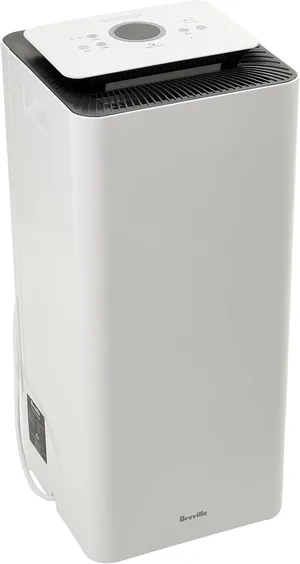
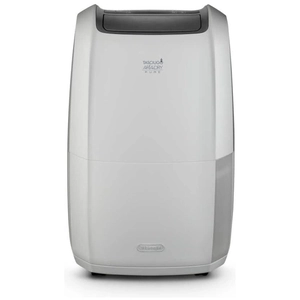
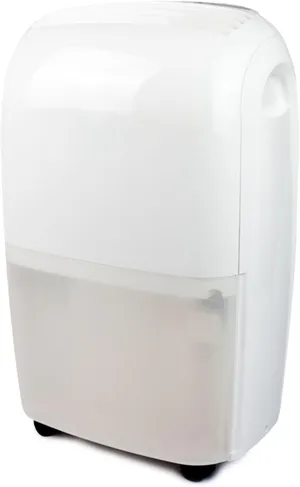
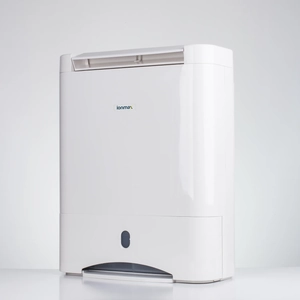
Two different technologies sit side by side in the dehumidifier aisle. Compressor units work like a reverse air-conditioner: they pull warm moist air over a cold coil, water condenses out, dry air returns to the room. Desiccant units use a moisture-absorbing wheel and a heater, no refrigerant involved. The Breville Smart Dry Plus LAD308, DeLonghi Tasciugo AriaDry DDSX225WF, and Ausclimate NWT Medium are all compressor units. The Ionmax ION632 is desiccant.
Compressor units are cheaper to run, quieter, and more effective above about 18 degrees Celsius. They struggle and eventually stop working below 15 degrees because the coil ices up. If you live anywhere that gets cold in winter, Melbourne, Hobart, Canberra, the Blue Mountains, a compressor unit does nothing for you from May to September. That is when a desiccant earns its keep. Desiccants work at any temperature, use more power per hour, and run warmer and louder. For Sydney and Brisbane buyers dealing with summer humidity, go compressor. For southern-capital buyers with cold winter damp, go desiccant or own one of each.
Extraction Claims and What You Will Actually See
Every dehumidifier is rated by litres per day of water extracted. That number is measured at 30 degrees Celsius and 80 per cent relative humidity. That is a Darwin bedroom in February. It is not a Melbourne bathroom in July. At average Australian conditions of 22 degrees and 60 per cent humidity, you will see roughly 40 to 60 per cent of the rated number.
A unit rated at 20L/day will pull 8 to 12L on an average day. A 25L/day unit will pull 10 to 15L. Size the product to the rated figure, not to your optimistic expectations. If you need to dry a wet room in winter, pick a desiccant because a compressor rated at 10L/day might only deliver 3L at 12 degrees Celsius.
Room Size and Placement
Small bedroom up to 15 square metres: 10 to 12L/day unit is enough. A desiccant is fine and often preferred for closed bedroom use because it runs warmer.
Medium living area 20 to 40 square metres: 20L/day is the minimum. The Breville Smart Dry Plus LAD308 at 20L is the right fit for this room size.
Whole apartment or open-plan 40 to 70 square metres: 25L/day or more. The DeLonghi Tasciugo AriaDry DDSX225WF handles this category.
Garage, basement or laundry requiring continuous drying: you want hose-drain capability so you are not emptying a 3.5L tank every few hours. Both the Breville LAD308 and the DeLonghi DDSX225WF ship with hose-drain fittings out of the box.
Noise Level and Where You Will Put It
Dehumidifier noise is measured in dB at 1 metre distance. 40 to 45 dB is a running fridge. 50 dB is a dishwasher on rinse. Most compressor units cluster between 44 and 48 dB on their low setting, 50 to 55 dB on high. Desiccants run louder, 50 to 55 dB on low, because they have a heater fan as well as the main fan.
Bedroom use is the hardest test. The DeLonghi DDSX225WF at 44 dB low speed is the quietest mainstream compressor unit sold in Australia. The Ausclimate NWT Medium at 48 dB is audible in a quiet bedroom. The Ionmax ION632 desiccant at 47 dB is fine with a closed door but carries into adjoining rooms.
Sensitive Choice and Allergy Relevance
The Sensitive Choice blue butterfly is Asthma Australia's endorsement mark, and it applies to only a handful of dehumidifiers sold locally. The Ausclimate NWT Medium WDH-716DE carries the certification. If you have asthma, eczema, or an allergic household, this is not decoration. It means the unit has been independently assessed for allergen filtration and for not emitting anything that worsens respiratory conditions. Most dehumidifiers never apply for it, so treat the certification as a plus rather than expecting it across the category.
Australian Consumer Law and Expected Lifespan
The manufacturer warranty on a dehumidifier is usually 1 to 2 years. Under the Australian Consumer Law, a reasonable consumer is entitled to expect this class of appliance to last a period consistent with what they paid.
At the $300 to $500 budget-mid tier (Ausclimate, Ionmax), the reasonable lifespan expectation is 5 to 7 years. At the $500 to $650 mid tier (Breville LAD308, DeLonghi DDSX225WF), it is 6 to 8 years. Compressor units have the refrigerant circuit as their main failure point; desiccants have the wheel and the heating element. If your unit fails inside the expected window, the ACL claim goes through the retailer that sold it to you, not the manufacturer. Bring the receipt.
Where to Buy and Retailer Coverage
Harvey Norman, The Good Guys, Appliances Online and Bing Lee carry the full mainstream range. Breville Australia sells the LAD308 direct. Ausclimate sells direct at ausclimate.com.au. Ionmax Australia operates through Bing Lee and Harvey Norman primarily.
OzBargain is the single best place to track dehumidifier pricing in Australia. The DeLonghi DDSX225WF regularly drops from $599 to $499 on major retailer sales. The Breville LAD308 rarely discounts more than 10 per cent off RRP. The Ausclimate NWT Medium has had OzBargain posts at $303, roughly 35 per cent off RRP.
My Top Picks
Ready to pick one?
Check out my ranked list with scores, prices, and AU availability.
See the Best Dehumidifiers