How to Choose an Air Fryer - Buyer's Guide
Last updated: 19 Apr 2026
Air Fryer vs Countertop Oven, Know Which You Actually Want
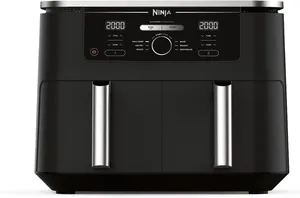
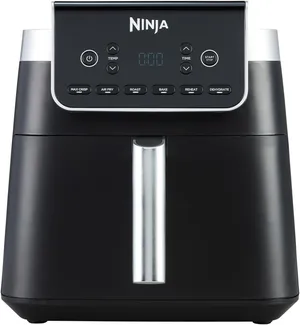
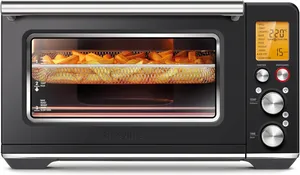
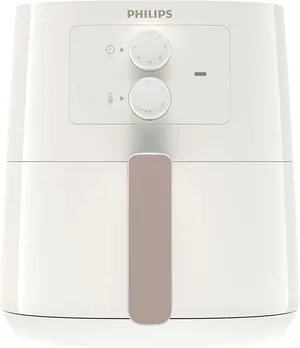
These are two different appliances that both show up in the air fryer aisle. A basket-style air fryer is a sealed chamber with a single drawer and a fan forcing hot air around your food. The Ninja Foodi Max AF400, the Ninja Pro XL AF181, the Philips Essential HD9200 and the Kmart Anko AF701 are all basket-style. A countertop convection oven with an air fry setting is a benchtop oven that has air fry on the function dial. The Breville Smart Oven Air Fryer BOV860 is the countertop oven in this group.
Basket-style units are faster, noisier, more compact and cheaper, and they crisp frozen food better than anything else in your kitchen. Countertop ovens are slower, quieter, bigger, more versatile, and they properly replace a second oven if your kitchen only has one. Buy the basket if you mostly cook frozen chips, reheats and single proteins. Buy the countertop oven if you bake, slow cook or roast whole chickens and you are willing to give up 47cm of bench depth.
Most buyers end up using the air fryer for one thing. Be honest about what you will actually cook. If it is genuinely just chips and reheated pizza, a $89 basket unit does that job. If you want a second oven, the $449 Breville earns its price.
Capacity and Family Size
For one or two people, a 4 to 5L basket is enough. The Philips Essential at 4.1L fits two single portions, the Kmart Anko at 5.3L fits two portions with room to shake. Either works for a couple or a single person cooking 1 to 2 meals at a time.
For three or more people, you want 6L or more. The Ninja Pro XL at 6.2L is the single-zone option and fits a family-size lasagne or 800g of chips laid mostly single-layer. The Ninja Foodi Max at 9.5L across two drawers is the dual-zone option and fits a family meal of protein-plus-sides without batching.
Bigger baskets cook slightly slower because the air has more volume to circulate. A packed 9.5L takes a minute or two longer than a packed 4.1L. For speed-critical cooking this matters; for everything else, capacity wins.
The common mistake is buying a 4L unit for a family of four and then cooking in three batches. If you have kids who all want hot chips at the same time, 4L is the wrong answer even at $89.
Dual Zone vs Single Basket
Dual-zone air fryers have two independent baskets, each with its own heating element, fan, temperature and timer. The Ninja Foodi Max AF400ANZ is the standout at $289 to $350. The feature that justifies the price is SYNC, which staggers the start of the faster drawer so both finish at the same time. You cook chips at 200°C on one side and chicken Maryland at 180°C on the other, press SYNC once, and both are ready simultaneously.
Single-basket units are simpler, cheaper, smaller and limit you to one temperature at a time. For couples or people who cook single-component meals, this is not a compromise, it is just how it works. For families juggling multiple items at different temperatures, dual zone saves genuine time.
The practical question is whether you regularly cook meals where two ingredients want two different temperatures. If yes, the AF400 is worth the step up. If no, the Pro XL single-zone at $199 to $249 or the Philips Essential at $89 to $119 does the job.
Build Quality and Price Expectations
At $89, the Kmart Anko AF701 is plastic, lightweight, and runs at a punchy 1800W. It works. Frozen chips come out crispy in 14 minutes. The basket coating starts showing wear at the 8 to 12-month mark with daily use, which is entirely reasonable at this price. Expected lifespan is 2 to 3 years.
At $89 to $119, the Philips Essential HD9200/21 pays a small premium for brand reliability, Rapid Air airflow, and a genuine 2-year warranty. Lower capacity than the Anko (4.1L vs 5.3L) and lower wattage (1400W vs 1800W), but the build quality and service network justify the extra $10 to $30 for some buyers. Expected lifespan is 3 to 4 years.
At $199 to $249, the Ninja Pro XL AF181ANZ gives you Max Crisp at 240°C, ceramic non-stick baskets that outlast painted coatings, and a 2-year Ninja warranty. Expected lifespan is 4 to 6 years. This is the sweet spot for most single-zone buyers.
At $289 to $350, the Ninja Foodi Max AF400ANZ is the best value for families because the dual-zone feature set does not exist anywhere cheaper. Expected lifespan is 5 to 7 years.
At $379 to $499, the Breville Smart Oven Air Fryer BOV860 is a countertop oven with air fry on the dial. Expected lifespan is 7 to 10 years and Breville Australia's service network is the strongest in the entire category.
What You Will Actually Cook
You are thinking about salmon fillets and roasted vegetables. The reality is you will cook frozen chips, reheated pizza, chicken nuggets and the occasional chicken Maryland for the first six months.
Air fryers are brilliant at crisping frozen food fast. That is what they are engineered for. Reheating pizza without the microwave-dried base is the second most common task. These two jobs justify the purchase.
After a few months, most households expand to homemade potato wedges, marinated chicken thighs, frozen fish and occasionally baked goods. That is roughly the limit before the novelty wears off and the appliance settles into a role as the fast-reheat-and-crisp tool.
This is why capacity, wattage and build quality matter more than function count or smart features. Six preset functions marketed as "6-in-1" usually means six pre-programmed temperature and time combinations, not six different cooking modes. Do not pay extra for function counts alone.
Australian Consumer Law and Expected Lifespan
The manufacturer warranty on an air fryer is usually 1 to 2 years. That is the floor, not the ceiling of your rights. Under the Australian Consumer Law, a "reasonable consumer" is entitled to expect an appliance to last for a period that matches the price paid.
At the $89 budget tier (Kmart Anko, Philips Essential), the reasonable lifespan expectation is 2 to 4 years. At the $199 to $349 mid-range tier (Ninja Pro XL, Ninja Foodi Max), it is 4 to 7 years. At the $379 to $499 premium tier (Breville BOV860), it is 7 to 10 years. If your unit fails inside that window, you have a consumer guarantee claim.
The ACL claim goes through the retailer that sold it to you, not the manufacturer. Bring the receipt or the app purchase record. The retailer carries the obligation first. Some manufacturers (Ninja Australia, Breville Australia) are pragmatic enough that going direct gets the same outcome faster, but the statutory right sits with the retailer. Kmart's 60-day returns policy is a separate shortcut that works inside the first two months for any reason, no ACL argument needed.
Where to Buy and Retailer Coverage
JB Hi-Fi and Harvey Norman stock all the Ninja and Breville models at RRP with occasional sales. The Good Guys runs regular sales on the Ninja range. Appliances Online is strong on Breville. Myer and Big W carry the Philips Essential at a small discount to Philips Australia direct. The Kmart Anko is Kmart-exclusive and does not appear anywhere else at retail.
OzBargain is the single best place to track air fryer pricing in Australia. Running deals appear monthly across the Ninja and Breville ranges, roughly 10% to 20% off RRP. The Kmart Anko stays at $89 year-round and does not get discounted.
Whirlpool's cooking forum (forums.whirlpool.net.au/forum/143) is the single best place to read long-tail reliability reports from Australian owners, especially for the Ninja AF400 which has been on shelves long enough to have proper 3-year data.
My Top Picks
Ready to pick one?
Check out my ranked list with scores, prices, and AU availability.
See the Best Air Fryers